Full flake for garages
Colored flakes go into the wet coat and get sealed under a clear topcoat, so the floor hides dust and tire marks and gives some grip underfoot. It's what most people pick for a garage they park in every day.
Stained, dusty or peeling garage floor? We check your slab first, then put down a coating that cleans easily and lasts for years.
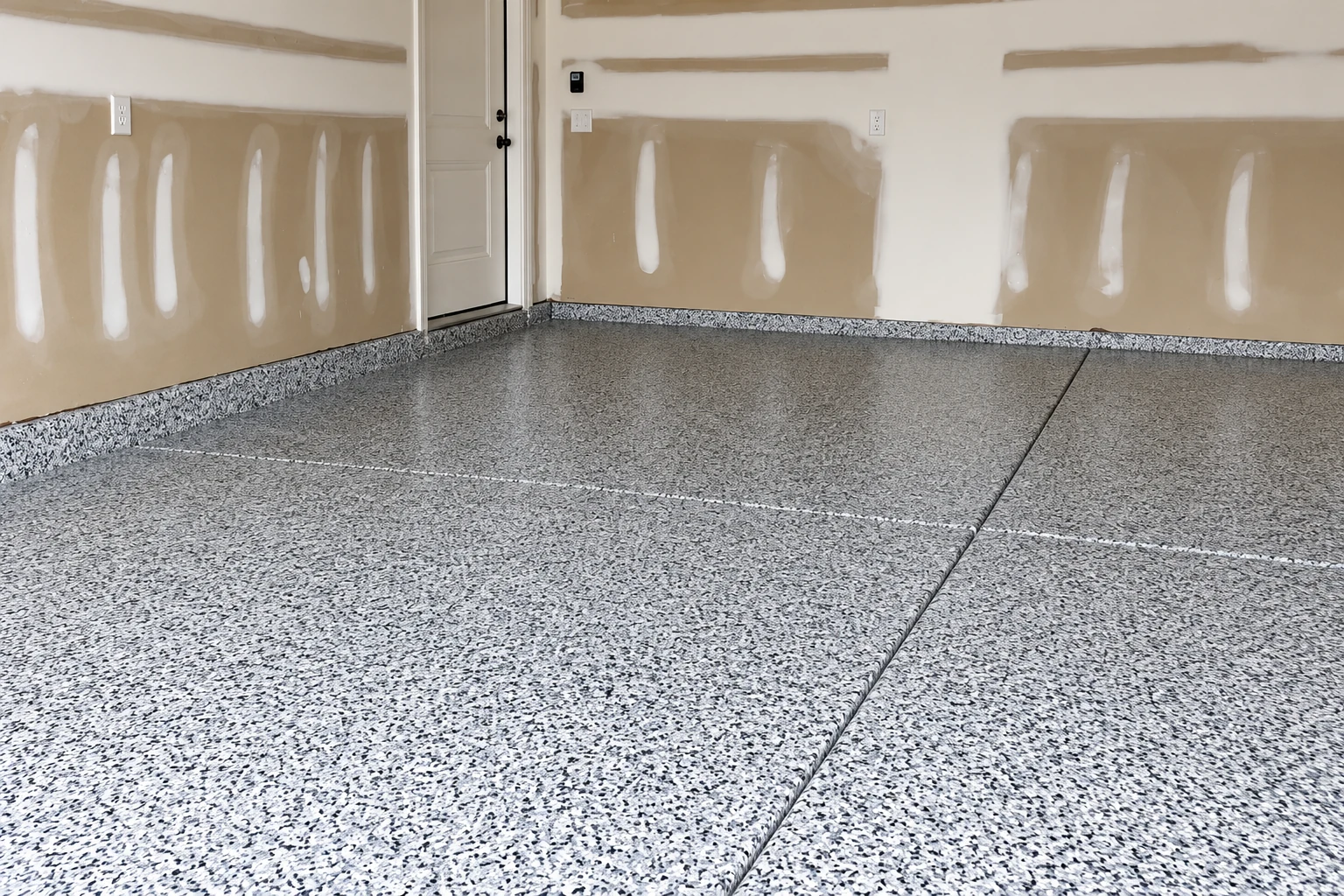
A polyaspartic floor coating is a hard, glossy finish we put down over prepared concrete in Brownsville garages, patios and indoor floors, and it holds up for years with little more than sweeping and mopping. It costs more than epoxy and lasts longer, and that trade is usually what people are weighing when they call.
Most people who call us have a garage floor that's stained, dusty or peeling from an old coating, and they're deciding between this and epoxy floor coatings. The price mostly comes down to the size of the floor and how much work the slab needs first, because cracks, oil and old coatings all add grinding and repair time. The schedule turns on the slab too, since a damp slab has to be dealt with before anything goes down, and on the weather, which matters more here than in most places. When I come out, I look at the slab, ask how you use the space and write up what I'd do and why.
I'm the one who comes out to look at the job and check the concrete before anything gets recommended. Our crew lead and installers do the prep and the install, and I stop by while the work is going on to see it's going the way I wrote it up.
I started this business in Brownsville in 2020 after years of watching crews get sent to floors nobody had looked at. If your slab can't hold a polyaspartic system, I'll tell you so and point you to one it can, even when that's the smaller job.
We're licensed and insured. Before the crew comes, you'll know what needs to be moved out of the space, what day they're coming and what to ask about. Start that conversation at (956) 505-5381 or through our estimate form.
Send the form or call (956) 505-5381 and expect a reply within one business day. The estimate is free, done at your property and comes with no obligation, so I'll come out, check the slab, ask how you use the space and write up what I'd do and why. It helps to have the floor's rough square footage handy.
Permits first. The city's Building Permits and Inspections Division handles permits for remodeling and new construction in Brownsville, and whether a coating job falls under that is something we check with the office that covers your address before work starts. If your job needs a permit, we tell you and work through the paperwork with you.
The bigger local issue is heat. Two makers' sheets for their polyaspartic products put the top working temperature at 90°F, and in August 2026 the Brownsville airport averaged a daily high of 99.5°F, about three degrees over normal, with every day hitting 90°F or more. Heat shortens the time the coating stays workable and speeds up drying, and one maker says it's best applied as temperatures fall, especially outdoors, so with garages that bake by midday and patios in full sun, the time of day matters as much as the date and we talk timing through at the estimate. We're based in Brownsville and do the same work in San Benito, Harlingen and the other cities around it, so if yours isn't listed on the site, call and ask.
Across the US, a polyaspartic or polyurea garage floor coating usually runs about $6 to $10 per square foot, and that's the market range, not our price. Where your floor lands depends mostly on its size and how much grinding and repair the slab needs before coating. At the estimate I check the slab and write up what I'd do and why.
A professionally installed polyaspartic or polyurea system lasts about 10 to 20 years or longer, while epoxy typically lasts 5 to 10. It costs more per square foot than epoxy, so the question is whether you'll be using that floor long enough for the extra years to pay off. For a garage you park in daily and plan to keep, they usually do.
Yes. One coating maker notes that slabs at ground level give off moisture vapor and too much of it can make the coating blister and come loose, and another says the concrete must be dry and requires moisture testing. Ask any contractor how they'll test your slab, and I check yours before I recommend anything.
One maker lists 2 to 4 hours before you can walk on its coating and 48 hours before traffic, measured at 75°F. Warmer or cooler conditions shift that, and other products have their own times, so plan to keep cars and heavy items off until the full cure is up. We'll tell you the times for the product going down on your floor.
You can, but one national guide says DIY epoxy kits from home improvement stores often peel within 1 to 3 years. Polyaspartic is harder to do yourself because it sets fast, and one maker recommends extra experienced hands on larger floors for that reason. On a bigger floor, crew size is worth comparing between bids.