Benchmark Brownsville Concrete CoatingsBenchmark Brownsville Concrete CoatingsRequest an estimate(956) 505-5381

Commercial & Industrial Epoxy Floor Coatings in Brownsville TX - a floor that holds up

Peeling coating, worn traffic lanes or a bare slab that dusts? We prep it right and plan the work around the days you can close.

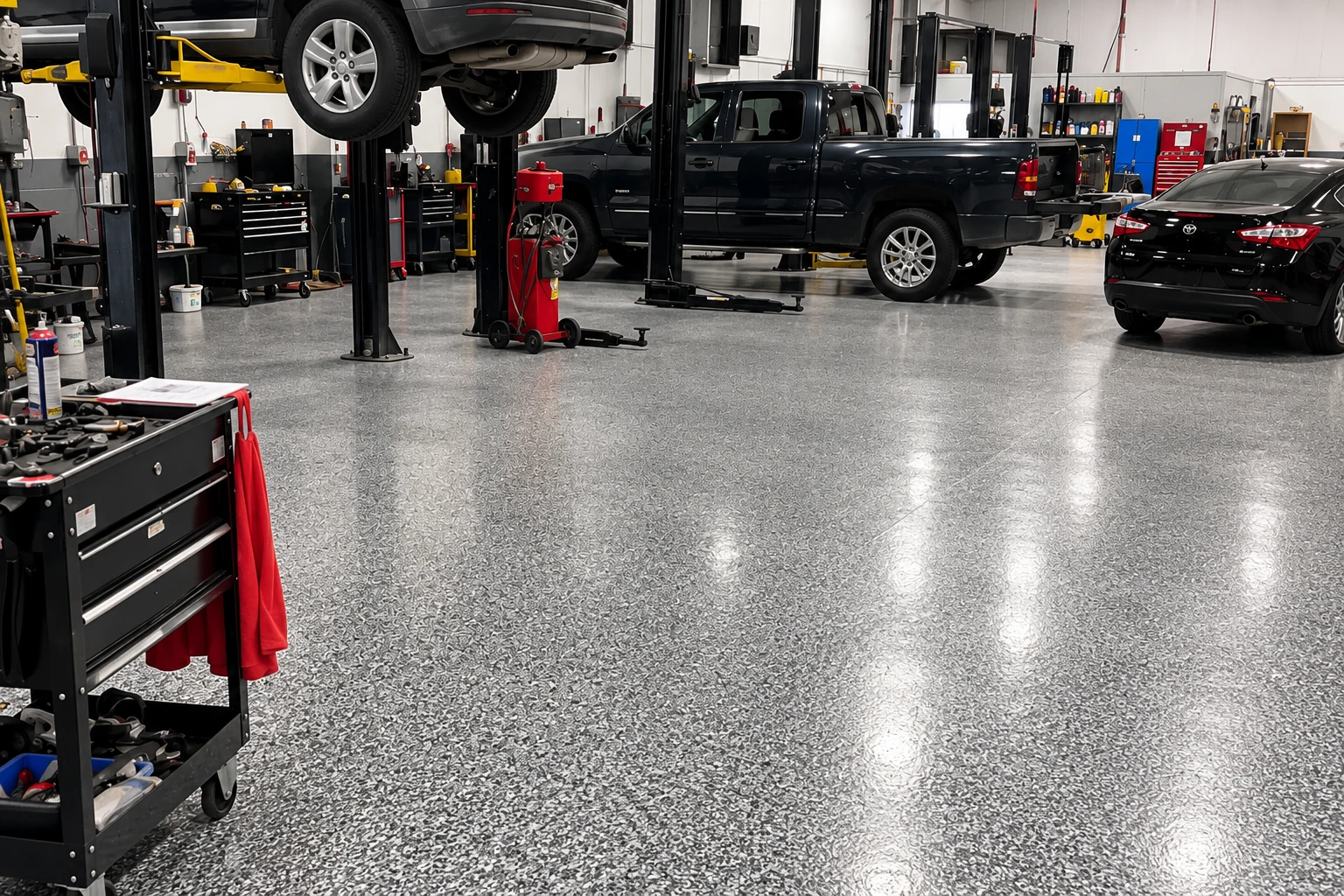
Glossy gray-speckled coating covers an automotive repair shop floor beneath cars on lifts and tool carts.

What goes into a commercial epoxy floor, and what decides the cost?

Commercial and industrial epoxy floor coatings in Brownsville, TX are coating systems our crew bonds to the concrete in warehouses, shops and service bays. The result is a floor that takes forklifts, carts, spills and cleaning instead of dusting and wearing through. Most of the planning goes into two things, the slab underneath and the number of days you can be closed.

Most calls start the same way. The old coating is peeling in the traffic lanes, the slab is stained and dusty, or you're moving into a building and want the floor done before the racks go in. The bad news comes first, because people should hear it up front. Price and schedule both depend on the slab. The condition of the concrete, how much moisture comes up through it, how much grinding and surface prep it needs, whether you want line striping and how many days you can shut down all change the number. When I come out, I look at the slab, ask how you use the space and write up what I'd do and why, so you plan from your own figure instead of a guess.

How we put down commercial and industrial epoxy floor coatings

The first thing I ask is how many days you can be closed, because we build the whole plan around that answer. Sometimes that means coating one section at a time while the rest of the building keeps working. Then I check the slab, including how much moisture is coming up through it, because that decides which system it can hold. Before the crew arrives, we agree on what has to move, like racks, pallets and equipment, and where it goes in the meantime. Our crew lead and installers grind the concrete so the coating has something to grip and fill cracks and damaged spots. Then they put down the coats and give them time to cure before traffic goes back on. Kitchens and food plants usually call for a different system, and I'll tell you so at the walkthrough rather than put epoxy where it isn't the right fit.

Some jobs need a different coating. When downtime is the hard limit, polyaspartic floor coatings cure faster than a traditional epoxy and are worth weighing for your schedule. A lot of business owners also ask about their own house, and our garage floor coatings get the same prep-first approach on a smaller slab.

Epoxy for warehouses, shops and service bays

This suits dry floors that take carts, forklifts, oil and regular cleaning. Lighter traffic can get by with a thinner coating, while forklift lanes and loading areas usually need a thicker, high-build system, so I match the build to how your floor actually gets used.

Urethane cement for kitchens and food plants

Standard epoxy isn't a good fit where hot water and sudden swings between hot and cold hit the floor every day. Urethane cement is the usual choice for kitchens and food processing, so if that's your space, plan around a different system from the start.

Why Brownsville businesses call Benchmark Brownsville Concrete Coatings for commercial floors

I check your slab before any quote

I'm the one who comes out to look at the job and check the slab. Our crew lead and installers do the prep and the install. I stop by while the work is going on, so the person who wrote the plan sees it carried out.

Doing prep-first floors since 2020

I started this business in 2020 after years of running schedules and watching crews get sent to floors nobody had looked at first. Prep is where floors fail. I'd rather talk you out of a system than put down one your concrete can't hold.

Licensed, insured and clear about next steps

We're licensed and insured. Before the crew shows up, you'll know what needs moving, which areas close on which days and who to ask, so nobody's left guessing. Call (956) 505-5381 or use our estimate request form to set up a walkthrough.

Get a written plan for your commercial epoxy floor

Send the form or call (956) 505-5381 with your floor size in square feet, how the space is used and how many days you can be closed. Expect a reply within one business day, and the on-site estimate is free, with no pressure and no obligation. I come out, check the slab, ask how you use the space and write up what I'd do and why.

Location
Brownsville, TX 78520
Hours
Mon–Sun: 8 AM–9 PM

Planning commercial epoxy floor coatings in Brownsville

The City of Brownsville processes permits and reviews plans for all remodeling and new construction, and it inspects permitted work when the client asks for an inspection. I won't guess whether a floor coating needs a permit on its own. Before work starts we check with the city's building permits and inspections office. If your job needs a permit, we tell you and work through the paperwork with you. If the floor is part of a bigger build-out or a new building, the city's commercial construction steps run from plan review and the permit through inspections to a certificate of occupancy, the city's sign-off to use the space. We fit the floor into that timeline so it doesn't hold anything up.

We're based in Brownsville and work in the cities around it, including Harlingen and San Benito. Most commercial calls here are warehouses, shops, service bays and storefronts. Some are older slabs with a worn coating to strip, and some are newer pours that need a closer look for moisture. The city pages show some of the places we go, not all of them, so if yours isn't listed, call and ask.

Questions business owners ask about commercial epoxy floors

How much does a commercial epoxy floor cost in Brownsville?

A 2026 national guide puts commercial epoxy flooring across the US at about $3 to $12 per square foot installed. Where your floor lands in that range comes down to the slab and schedule points covered above. The written plan I give you after looking at your slab is the number to budget from.

How long will my business be closed for an epoxy floor coating?

A traditional epoxy system can take 3 to 7 days before it's ready for full traffic. Fast-cure systems can take traffic within hours, but the material costs more, and phasing the job as described above keeps part of the building open. One coating maker's data sheet says high humidity and cool temperatures lengthen dry, recoat and cure times, so the schedule can stretch in those conditions.

What causes a commercial epoxy floor to peel or fail?

Moisture pushing up through the slab is one of the most common causes, especially on newer pours and on slabs without a vapor barrier, the plastic sheet laid under the concrete. Skipping the step that controls that moisture is a common reason coatings fail, so a contractor should test before quoting. One coating maker's guide calls for calcium chloride tests, a moisture test run on the slab, to tell whether the concrete is dry enough for epoxy. Ask any contractor how they'll test yours.

How long does a commercial epoxy floor last?

A properly specified and installed system usually lasts 10 to 20 years. Heavy-traffic areas like forklift lanes may need a fresh top coat every 5 to 7 years. It's worth budgeting for that upkeep from the start.

Will an epoxy floor get slippery or turn yellow near open bay doors?

It can do both, so it's worth planning for. One coating maker cautions that any floor coating may get slippery when wet, and it advises adding an anti-slip aggregate, a gritty additive, where you want a non-skid floor. The same maker's data sheet says its heavy-duty floor epoxy will yellow and chalk in sunlight. Tell me which areas get rain or sun at the walkthrough, and we'll plan for them.

Call (956) 505-5381